Most New Orleans homes face unique electrical challenges due to our humid climate, frequent storms, and aging infrastructure. The good news: simple preventive steps can dramatically reduce your risk of electrical fires, shocks, and damage to your home and family.
KEY TAKEAWAYS
– Never overload outlets or use daisy-chained extension cords, especially in humid climates
– Test smoke and carbon monoxide detectors monthly and replace batteries yearly
– Hire a licensed electrician to inspect your home every 3 to 5 years
– Protect outlets with childproof covers and GFCIs near water sources
– Prepare your electrical system for New Orleans hurricane and flood season
OUTLET OVERLOADING AND EXTENSION CORD SAFETY
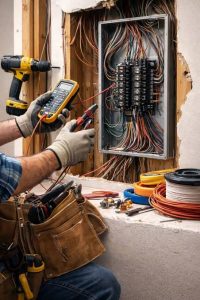 Plugging too many devices into a single outlet is one of the easiest ways to create an electrical fire. Each outlet has a maximum capacity, and exceeding it generates dangerous heat inside the walls. This problem intensifies in humid New Orleans air, where moisture can corrode wiring and reduce its ability to handle current safely.
The fix is straightforward: use fewer devices per outlet, and never daisy-chain extension cords (plugging one cord into another). A single heavy-duty cord is far safer than multiple cords connected end-to-end. Check extension cords regularly for fraying, cuts, or exposed wires, and replace damaged cords immediately. If your home was built before 1990 and you’re consistently relying on power strips, talk with a licensed Electrician about adding dedicated circuits for high-draw appliances.
SMOKE AND CARBON MONOXIDE DETECTION
Smoke detectors save lives by alerting you to fires early enough to escape safely. Most building codes require them in bedrooms and hallways. Carbon monoxide detectors are equally critical, especially if you use gas appliances or have a fireplace. Carbon monoxide is odorless and colorless, making a detector your only reliable warning.
Test both detector types monthly by pressing the test button. Replace batteries once per year, ideally when you change your clocks for daylight saving time. Detectors themselves need replacement every 10 years. If you’re not sure when yours were installed, check the date on the back or simply replace them to be safe. Ensure detectors are not covered by dust or paint, as this blocks their sensors.
CHILDPROOFING OUTLETS AND CORDS
Young children are naturally curious about electrical outlets and cords. Outlet covers and safety plugs prevent small fingers from inserting objects into sockets. These inexpensive items are available at any hardware store and take seconds to install. Go room by room and cover every unused outlet in spaces where children play or sleep.
Keep cords out of reach whenever possible, especially cords for lamps, fans, and kitchen appliances that could pull a heavy object onto a child if yanked.
WATER, HUMIDITY, AND ELECTRICAL SAFETY
Living in New Orleans means dealing with heat, humidity, and seasonal flooding. Water and electricity don’t mix. Keep electrical appliances away from bathtubs, sinks, and poolside areas. Never use electrical equipment in or near water unless it’s specifically designed for wet environments.
Humidity corrodes electrical components over time, making outlets and switches in bathrooms and kitchens especially vulnerable. GFCI outlets (ground fault circuit interrupters) are a must in any room with water exposure. These outlets instantly cut power if they detect a current leak, preventing electrocution. Have a licensed electrician install GFCI protection in all moisture-prone areas. Check basement and crawl spaces for discoloration, unusual odors, or water damage. If you spot problems, stop using that area and call an electrician.
SURGE PROTECTION AND POWER STRIPS
Thunderstorms are common in New Orleans, and lightning strikes can send dangerous power surges through your home’s electrical system. Surge protectors limit voltage spikes that could destroy appliances and electronics.
A whole-house surge protector installed at your electrical panel offers the best defense against major power surges from lightning. Individual surge-protected power strips protect specific devices like computers, entertainment systems, and kitchen appliances. Don’t confuse a power strip with a surge protector. A basic power strip just extends outlets but offers no protection, so look for one labeled “surge protector” or “surge suppression,” and replace it every few years as it wears out.
SCHEDULING REGULAR ELECTRICAL INSPECTIONS
Even if everything seems fine, periodic inspections catch hidden problems. A licensed electrician can identify outdated wiring, overloaded circuits, faulty connections, and code violations that you cannot see.
The National Electrical Code recommends inspections every 3 to 5 years. If your home was built before 1970, older wiring materials like aluminum or knob-and-tube may pose fire hazards. An inspection takes 1 to 2 hours and costs far less than repairing fire damage.
HURRICANE AND FLOOD ELECTRICAL SAFETY
Hurricane season runs June through November in our region. Before a storm, photograph your home and electrical system for insurance purposes. If your home floods, never try to restore power yourself. Saltwater and floodwater are highly conductive, creating serious shock hazards. Do not touch outlets, switches, or appliances in wet areas. Have a licensed electrician perform a thorough inspection and safety check before restoring power.
If you use a backup generator for outages, operate it only outdoors to prevent carbon monoxide buildup inside. Never connect a generator directly to your home’s electrical panel without professional installation of a proper transfer switch.
TAKE ACTION TODAY
Electrical safety is not something to postpone. Start this week by testing your smoke detectors, installing outlet covers if you have children, and scheduling that inspection. When in doubt about your home’s electrical system, consult a licensed electrician.
MK Electric Man serves New Orleans homeowners with inspections, repairs, and upgrades. Visit www.neworleanselectricians.com to schedule your safety evaluation today. Your family’s safety is worth the investment.